
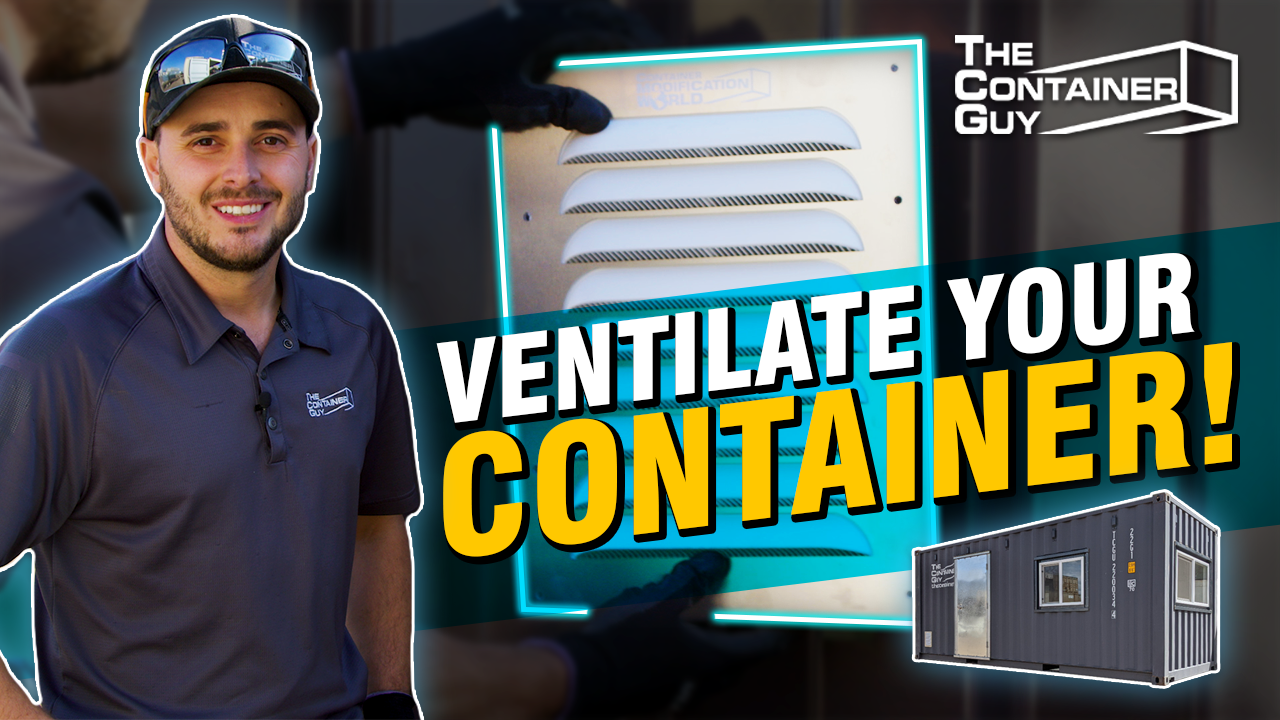
How to Install BigAir® 45 Vents on a Shipping Container
Proper ventilation is one of the most important upgrades you can make to a shipping container. Without airflow, containers are prone to condensation, excess heat buildup, and moisture damage.
In this guide, Channing McCorriston, The Container Guy, walks through the step-by-step installation of BigAir™ 45 vents and explains why they solve the majority of common container climate issues.
Why Install BigAir® 45 Vents?
BigAir® 45 vents are designed to address roughly 90 percent of condensation and heat problems inside shipping containers.
They allow air to circulate naturally, reducing temperature swings and preventing moisture from building up on interior surfaces. This helps protect stored equipment, tools, vehicles, and materials from rust and water damage.
The vents are available in two versions:
-
Standard vent
-
Vent with integrated bug screen
The bug screen option uses mesh similar to residential screen doors to keep insects out while maintaining airflow.
Built for Harsh Conditions
BigAir® 45 vents are manufactured from proprietary polypropylene plastic engineered to withstand:
-
UV exposure
-
Cold temperatures
-
Physical impacts
They are durable enough to handle demanding environments without cracking, fading, or deteriorating.
Each vent features built-in drain holes within the corrugation cavity. These allow any incidental moisture to exit the container rather than accumulate inside the wall system.
Proper Vent Placement
Correct placement is critical for optimal airflow.
For best results:
-
Install one vent high on one corner
-
Install a second vent low on the opposite corner
The lower vent typically functions as the air intake, while the upper vent allows warm, moist air to escape. This creates natural cross-ventilation inside the container.
Vents must be mounted on the outside corrugations of the container. Installing them on inner corrugations will result in a poor fit and may require welding repairs.
Installation Overview
1. Choose the Location
Select a flat area on the outside corrugations, either on the end wall or sidewall. Ensure placement allows proper airflow and avoids structural members.
2. Use the Template
Each vent includes a paper template measuring approximately 9 inches wide by 14 inches tall.
Tape the template in place and mark the cut lines. Mark the outer corrugations first, then the inner corrugations.
3. Cut the Opening
Carefully cut along the marked lines to create the opening. Take your time to ensure clean edges and accurate sizing.
4. Test Fit
Place the vent into the opening to confirm proper fit. The flange should sit securely against the outside corrugations.
5. Drill Mounting Holes
Drill holes through the vent flange and container for rivets or self-tapping screws.
6. Secure the Vent
Attach the vent using rivets or screws, ensuring it sits tight against the corrugated surface.
7. Seal for Waterproofing
Apply a bead of silicone along the top and bottom edges of the flange. You can also seal the sides and rivet heads for additional protection.
Silicone helps prevent water intrusion and adds an extra layer of durability.
8. Confirm Drainage
Make sure the internal drain holes remain unobstructed so water can escape properly.
Additional Considerations
-
The bug screen version is recommended in warmer climates where insects are a concern.
-
Silicone around rivets can prevent leaks if fasteners loosen over time.
-
Installing vents dramatically improves container climate stability.
-
For added security, a high-security lock box can be installed to deter vandalism.
Final Thoughts
Ventilation is essential for maintaining a dry, stable container interior.
BigAir® 45 vents provide a simple, durable solution to combat condensation, reduce heat buildup, and improve air exchange. With proper placement and installation, they offer long-term protection for whatever you store inside your container.