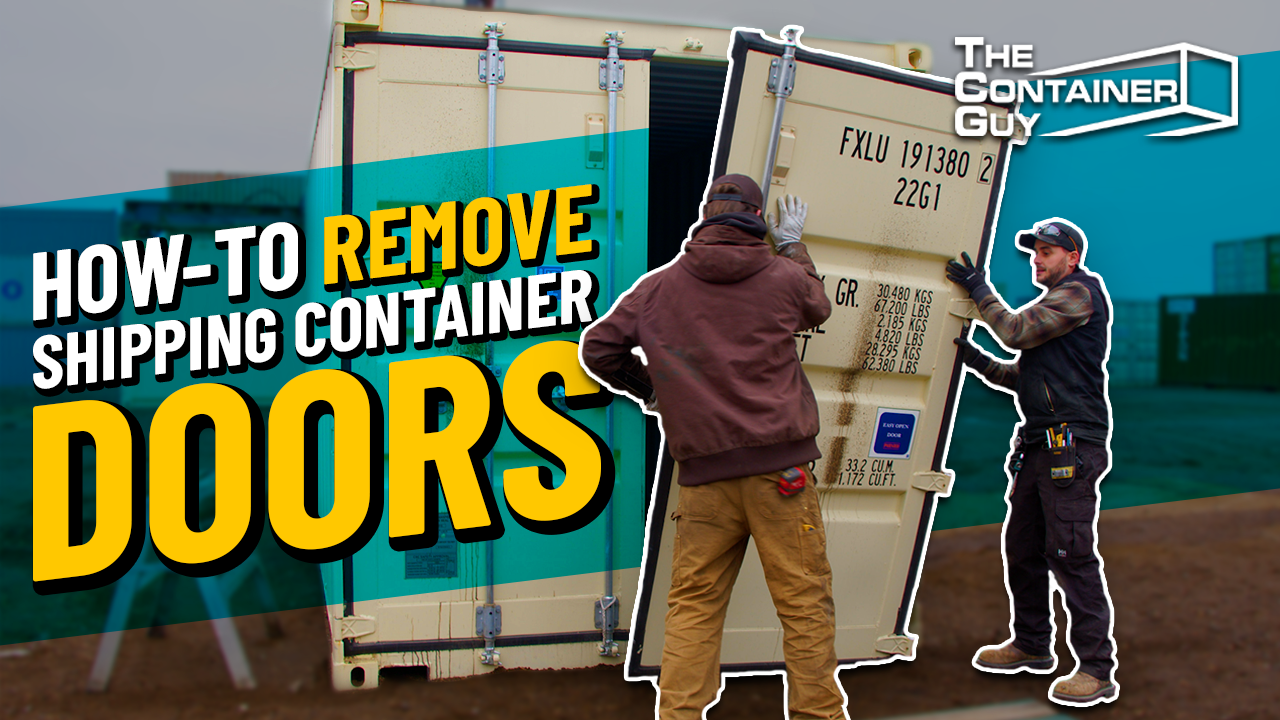
The Fastest and Safest Way to Remove Shipping Container Doors
In this walkthrough, Channing McCorriston, The Container Guy, demonstrates the quickest, cleanest, and safest way to remove shipping container doors.
Whether you are replacing damaged doors, converting a container into a cabin or workshop, or preparing for a roll-up or roll shutter door installation, this method minimizes structural disruption and keeps the process efficient.
Preparation Is Everything
Before making a single cut, make sure both container doors are fully closed and latched.
This is critical.
Leaving the doors open or unsecured allows gravity to work against you, making removal harder and increasing the risk of injury. Keeping them latched ensures proper alignment and controlled movement during the cutting process.
Do Not Cut the Corner Post
A common misconception is that you need to remove the entire corner post section to take off container doors.
That is unnecessary.
The most efficient method focuses solely on the hinge pins.
Understanding the Hinge System
Shipping container doors are secured using hinge pins made from 12 mm (half inch) cold-rolled round rods.
These rods pass through hinge butts that are welded to the container’s corner posts. By cutting the hinge pins instead of removing structural steel, you preserve the container’s integrity while freeing the doors.
Step-by-Step Door Removal
1. Cut the Bottom Hinge Pins First
Using a cut-off wheel, make small, controlled cuts through the bottom hinge pins.
Starting with the bottom hinges makes the process easier to manage once the top hinges are cut.
There are typically eight small cuts required in total across both doors.
2. Cut the Top Hinge Pins
After the bottom pins are cut, move to the top hinges and repeat the process.
Keep the doors latched during cutting to maintain alignment and control.
3. Open and Remove the Doors
Once all hinge pins are cut, open the doors normally.
Have assistance ready.
Container doors are heavy, and lowering them safely requires at least one other person. Carefully lift the doors away from the container and place them on pallets to prevent damage.
Safe Storage
After removal, store the doors on pallets or stable supports.
This prevents bending, scratching, or damage if the doors will be reused or reinstalled later.
Brief Overview of Reinstallation
Reinstalling container doors involves:
-
Welding hinge butts back onto the container
-
Inserting 12 mm hinge pins
-
Aligning and lifting the doors into position
-
Welding hinge butts while the doors are latched for proper alignment
Keeping doors latched during welding ensures they remain square and properly aligned.
Why This Method Works
This hinge-pin cutting method offers several advantages:
-
Preserves structural integrity
-
Avoids cutting corner posts
-
Reduces labor
-
Minimizes damage
-
Maintains proper alignment
It is especially useful when preparing containers for alternative doors such as roll-up or roll shutter systems.
Key Takeaways
-
Always latch doors before cutting
-
Cut bottom hinge pins first
-
Use a cut-off wheel for controlled cuts
-
Have help ready to handle heavy doors
-
Store removed doors safely
Final Thoughts
Removing shipping container doors does not require major structural cuts.
By focusing on hinge pins and following a controlled cutting sequence, you can safely remove doors with minimal damage and maximum efficiency.
This method is ideal for container modifications, replacements, or preparing for new door installations. Proper preparation and safe handling make the process straightforward and professional.